

How Sleep Helps New Vocabulary Stick After Language Practice
Last updated on
Editorial owner: Taylor Freeman · Editorial policy
You finish a language lesson, close the app, and feel as if half the new words have already disappeared. That feeling is normal. New vocabulary is fragile at first. Your brain needs time to keep it.
Some of that work happens while you sleep. A large review of research found that people generally remembered newly learned words better after sleep than after spending the same amount of time awake. This does not mean you can play Spanish audio all night and wake up fluent. It means a good study session may continue to help you after you have stopped studying.
That is encouraging news. Progress does not depend on pushing through another tired hour. A short period of focused practice, followed by normal sleep, can be a sensible way to learn.
What researchers found about sleep and new words
In 2021, researchers combined results from 25 studies with 1,396 healthy adults. The studies compared memory for new words after sleep with memory after a similar period of wakefulness. On average, sleep had a moderate benefit. It helped with recall, recognition, and the process of fitting a new word into the learner’s existing vocabulary.
The details matter. Most of these studies used controlled word-learning tasks, not complete language courses. Remembering a list in a laboratory is not the same as having a conversation in French or Japanese. Still, the result was consistent enough to support a practical point: sleep is part of memory, not empty time between lessons.
A 2023 study tested a more natural kind of learning. Adults read stories that gave familiar words new meanings. People remembered those meanings better after a 12-hour period that included overnight sleep than after 12 hours awake. Recall was strongest when sleep came soon after learning. The researchers also offered a simple possible explanation. Sleep may protect a fresh memory from the many words and experiences that compete with it during the day.
Scientists still debate how much of the benefit comes from active memory consolidation and how much comes from protection against interference. For a learner, the practical lesson is similar either way. Give a new memory a quiet chance to settle.
Sleep helps practice, but it does not replace it
There is a tempting version of this research that says you can learn a language while asleep. The evidence does not support that claim.
In one well-known experiment, German-speaking participants first learned Dutch words while awake. Researchers then replayed some of those words during non-rapid eye movement sleep. The cued words were recalled better later. This is called targeted memory reactivation, and it is an interesting research method.
It is not a reason to run a vocabulary playlist beside your bed. The timing was controlled in a sleep laboratory, and the words had already been studied while the participants were awake. Random audio may disturb sleep, which would work against the goal. The reliable first step is still ordinary learning: pay attention, retrieve the word, say it, and use it in context.
If you want vocabulary that is easier to use in conversation, study phrases as well as isolated terms. This guide to learning useful word chunks explains why groups such as “Could you help me?” often serve you better than a single word such as “help.”
A simple evening routine
You do not need to move every lesson to bedtime. Regular practice matters more than finding a perfect hour. But if evenings suit your schedule, try this short routine.
- Choose five to eight useful phrases that you are likely to say this week. A small set gives you time to work with each phrase properly.
- Listen to a clear example, then say it aloud. Pay attention to the rhythm, not only the separate sounds.
- Hide the phrase and try to recall it from a meaning, picture, or question. This effort is part of learning.
- Use each phrase in a short exchange. Ask a question, answer it, and change one detail. Talkio can give you a low-pressure conversation partner when another person is not available.
- Stop before you are exhausted. Write down the phrases for a quick check the next day, then finish. More practice is not always better when attention has gone.
A 10 to 15 minute speaking session is enough for this routine. If you prefer more structure, try the 15-minute speaking loop, which combines listening, repetition, recall, and a short conversation.
Check the memory the next day
Sleep is only one part of the process. The next morning or later that day, test yourself for two or three minutes. Do not begin by reading the answers. Look at the meaning or situation and try to say the phrase.
If you remember it, use it in a new sentence. If you forget it, check the answer and try again. Forgetting is not proof that the routine failed. It tells you which memory needs another visit.
This next-day check also keeps the science in perspective. Sleep may improve the odds that a word survives, but one night will not make every memory permanent. Words become useful through repeated encounters in different contexts. Listening practice helps you recognize them in real speech, while conversation practice teaches you to find them quickly. If spoken language still feels too fast, this article on training your ear with real-time conversations offers a practical next step.
Protect sleep instead of studying through it
Language learners often treat sleep as time they could have used for one more lesson. That trade is usually poor. When you are very tired, attention drops, practice becomes careless, and new information is harder to encode in the first place.
You do not need a special sleep schedule for vocabulary. Aim for the amount of sleep that supports your health and daily functioning. The US National Heart, Lung, and Blood Institute says most adults need about seven to nine hours a night, although individual needs vary. Keep noisy study audio out of the bedroom if it wakes you. A calm, dark room is more useful than an overnight “fluency” recording.
Also, do not worry if your schedule is imperfect. One late night does not erase your progress. Return to the routine when you can. Language learning works over months and years, not one flawless evening.
Rest can make the plan more sustainable
The nicest part of this research is not the idea of a memory trick. It is permission to stop.
Learn a manageable set of phrases. Say them in a real exchange. Make a few mistakes, because mistakes are a normal part of speaking practice. Then rest and return for a brief check the next day.
Sleep will not do the learning for you. It may help your brain hold on to what you practiced while awake. That is a modest claim, but it is useful. You do not have to study until you are worn out to take language learning seriously.
Sources
- The effect of sleep on novel word learning in healthy adults: a systematic review and meta-analysis, Psychonomic Bulletin & Review, 2022.
- The role of sleep in learning new meanings for familiar words through stories, Journal of Cognition, 2023.
- Boosting vocabulary learning by verbal cueing during sleep, Cerebral Cortex, 2015.
- The beneficial role of memory reactivation for language learning during sleep: a review, Brain and Language, 2016.
- How much sleep is enough?, US National Heart, Lung, and Blood Institute.
Talk Your Way
to Fluency
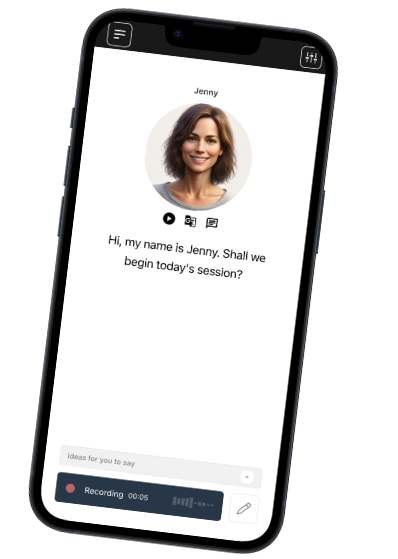
Talkio is the ultimate language training app that uses AI technology to help you improve your oral language skills!
Try Talkio