

Voiced and Unvoiced S Sounds: /s/ vs. /z/ in English
Last updated on
Editorial owner: Taylor Freeman · Editorial policy
You don’t hear the difference in ink, you hear it in breath. In the short gap between cats and dogs, there’s a sound that can mark you as fluent or not, and it has nothing to do with spelling. Like rhythm in poetry, it’s the kind of detail that gets overlooked until someone points it out and then, suddenly, you hear it everywhere.
For practical follow-up, use Talkio’s pronunciation-practice app guide together with its accent-reduction guide. For a consistent symbol-to-sound reference, consult the International Phonetic Association’s IPA chart.
If you’ve ever wondered why rice and rise sound so different but look so similar, you’re not alone. Most learners default to spelling cues, assuming that the letter “s” always sounds like /s/. But English doesn’t work that way.
In real speech, voicing matters, and relying on your eyes instead of your ears can lead to patterns that quietly hold you back. This piece isn’t about rules you already know. It’s about sound in motion, how to feel the difference between /s/ and /z/, and more importantly, how to start producing it naturally.
The Core Concept: What Voicing Really Means
Voicing is the subtle difference that turns rice into rise, and face into phase. It’s not about your mouth, it’s about vibration. In simple terms, unvoiced sounds like /s/ are made with just air. Voiced sounds like /z/ are made with your vocal cords buzzing. The only way to reliably spot the difference? Use your body, not your brain.
Here’s how:
Place your fingers lightly on your throat. Say “sip.” Feel nothing. Now say “zip.” You’ll feel a buzz.
That’s voicing. Your vocal cords are activated. And this pattern repeats across English in dozens of word pairs. Knowing it is one thing. Feeling it is another.
Common Mistakes That Hide in Fast Speech
Many learners fall into the /s/ trap. It feels clearer, safer, and more familiar. But in real speech, /z/ sneaks in far more often than you think, especially at the end of words. Take plurals: cats end in /s/, but dogs end in /z/. And houses? That adds a vowel too: /əz/. The pattern isn’t random, it follows voicing rules most learners never notice.
Then there’s what happens when words collide. Native speakers often blur sounds together, such as turning “has to” into “hass to” or “was she” into “wuh she.” These shifts make sense when you understand how voicing adapts to what comes next, but without that knowledge, it’s easy to miss the change entirely.
Mispronouncing these sounds won’t always block understanding, but they can make you sound less fluent, especially in meetings, interviews, or presentations.
Training the Ear and the Mouth Together
Knowing the rule isn’t enough, your brain needs to recognize the sound, your ear needs to catch it in real time, and your mouth needs to produce it without overthinking. That only happens with connected, physical practice.
Here’s how to make it stick:
- Start with Minimal Pairs
Practice sets like ice vs. eyes, bus vs. buzz, and face vs. phase. Say each word slowly, then speed up. The goal is to feel, not just hear, the shift from /s/ to /z/.
- Shadow Native Speech
Play short clips of real conversations. Pause, repeat, mimic. Not just the sound, but the rhythm and energy. Match their tone and pacing. You’re building muscle memory here.
- Use Tactile Feedback
Place fingers on your throat as you say /z/. Feel the vibration. Repeat with /s/—no buzz. You can even hum the /z/ to strengthen awareness. Your voice will guide you.
From Practice to Progress: The Right Tools Help
You can listen, repeat, and record, but real growth comes when you get feedback in the moment. That’s where many learners hit a wall, they repeat the same mistake without knowing it.
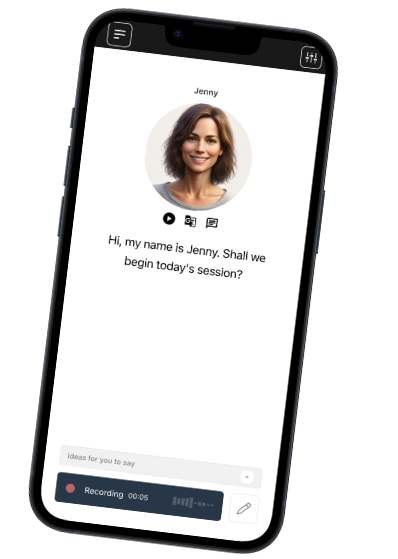
Progress only clicks when you pair repetition with real-time correction and actual speaking practice, not just passive listening. Apps like Talkio are designed to close that gap.
You get to speak out loud with a life-like AI tutor, who doesn’t just listen but corrects, with clear feedback on your /s/ and /z/ sounds. The responses are immediate, the conversation is real, and the feedback is based on how you actually speak.
Takeaway
The difference between /s/ and /z/ is tiny, but it’s the kind of detail that separates clear, confident speech from something that just sounds close. You don’t need to be perfect, just understandable. And that starts with noticing what your ears once ignored.
The goal isn’t flawless pronunciation, it’s real connection. Being able to speak naturally, without second-guessing every sound, lets you focus on what you mean, not how you’re saying it.
Stay consistent. Keep listening. Practice with tools that give you feedback. That’s where progress stops feeling random and starts becoming part of how you speak.
Talk Your Way
to Fluency
Talkio is the ultimate language training app that uses AI technology to help you improve your oral language skills!
Try Talkio