How to Start Speaking Spanish: A Beginner’s Practice Plan
Last updated on
Editorial owner: Taylor Freeman · Editorial policy
You do not need to wait until you know every tense to start speaking Spanish. Begin with a small set of high-frequency phrases that let you introduce yourself, ask a question, clarify meaning, and describe everyday routines. Then reuse those phrases in short conversations so vocabulary and grammar become available under real-time pressure.
Your first four weeks of Spanish speaking
- Week one: practise Spanish vowel sounds, greetings, introductions, and repair phrases.
- Week two: talk about routine, preferences, and immediate needs with present-tense patterns.
- Week three: role-play practical situations such as ordering, directions, and making plans.
- Week four: hold several five-minute conversations and review the same recurring difficulties.
Why Spanish, Why Now?
Spanish is the world’s second most spoken native language, with 484 million first-language speakers across more than 20 countries. French, by comparison, has around 74 million. But raw numbers only tell part of the story.
The cultural pull of Spanish has exploded. Latin music dominates global charts, with artists like Bad Bunny, Rosalía, and Peso Pluma making Spanish-language music impossible to ignore. Streaming platforms have made Spanish-language TV and film mainstream, from La Casa de Papel to Elite. And the business case is stronger than ever: the US alone has over 41 million native Spanish speakers, making it the second-largest Spanish-speaking country in the world by some measures.
For anyone considering a new language, the practical upside of Spanish is hard to beat. It opens doors across the Americas, Europe, and increasingly in international business settings where Spanish-speaking markets are growing rapidly.
The Gap Between Understanding and Speaking
Here is the frustrating reality most Spanish learners face: you can study grammar tables, memorize vocabulary, and binge Spanish Netflix, yet freeze completely when someone actually speaks to you. This comprehension-production gap is one of the most documented challenges in language acquisition.
Traditional courses tend to prioritize reading and listening. Apps gamify vocabulary until you can match “perro” to a picture of a dog in your sleep. But when you need to form a sentence in real time, with a real person waiting for you to respond, your brain goes blank. The skill of producing spoken language is fundamentally different from the skill of recognizing it, and it requires dedicated practice.
Research from the Dana Foundation confirms that the brain regions responsible for speech production need active, repeated engagement to develop. Passive listening is not enough. You have to open your mouth.
The Anxiety Problem Nobody Talks About
Even learners who know they need speaking practice often avoid it. The reason is straightforward: speaking a language you are not fluent in feels embarrassing. You worry about mispronouncing words, using the wrong conjugation, or simply going blank mid-sentence.
This is not just a feeling. Language speaking anxiety is a well-studied phenomenon that actively interferes with performance. When you are anxious, your working memory gets hijacked by self-monitoring (“Am I saying this right?”), leaving fewer cognitive resources for actually constructing sentences.
The irony is brutal: the thing you need to do to improve (speak) is the thing anxiety prevents you from doing. This is why so many learners spend years “studying” Spanish without ever becoming conversational. They are trapped in a cycle of passive learning that feels productive but never bridges the gap to real fluency.
Why AI Conversation Practice Changes the Equation
The emergence of AI-powered conversation partners has fundamentally changed what is possible for independent language learners. Instead of waiting until you feel “ready” (which, spoiler: never happens), you can start speaking from day one in a low-pressure environment where nobody is judging your accent.
The key advantage is not just availability, though being able to practice at 11 PM in your pajamas certainly helps. It is the removal of social pressure. When your conversation partner is an AI, the fear of embarrassment drops dramatically. You can stumble, restart, ask for help, and try again without anyone sighing or checking their phone. This matters enormously for building the neural pathways that spoken fluency requires.
Platforms like Talkio are designed specifically for this kind of speaking practice. Unlike general-purpose chatbots, dedicated language practice tools provide structured conversations, pronunciation feedback, and detailed corrections that help you improve systematically rather than just chatting aimlessly.
A Practical Plan for Your First 30 Days
If you are one of the millions of people who have decided 2026 is the year you finally learn Spanish, here is a realistic approach that prioritizes speaking from the start:
Week 1: Build a survival vocabulary. Learn 50 high-frequency phrases, not isolated words. “¿Dónde está…?” is more useful than memorizing “dónde” and “está” separately. Practice saying them out loud, even if just to yourself.
Week 2: Start AI conversations. Use a speaking-focused tool to have simple exchanges. Order food at a virtual restaurant. Ask for directions. The goal is not perfection, it is getting your mouth used to forming Spanish sounds.
Week 3: Add listening input. Pair your speaking practice with Spanish podcasts aimed at learners. The combination of hearing natural speech and then practicing your own production creates a reinforcement loop that accelerates acquisition.
Week 4: Push your comfort zone. Attempt longer conversations. Describe your day, explain your job, or debate whether paella should contain chorizo (a topic guaranteed to generate passionate responses from any Spanish speaker). The point is sustained output, not just one-sentence exchanges.
What Separates People Who Actually Learn From Those Who Quit
The data on language learning attrition is sobering. Most people who start learning a language abandon it within three months. The ones who stick with it share a few common habits.
First, they practice speaking early and often, rather than endlessly preparing to speak “someday.” Second, they build consistent routines, even if short. Fifteen minutes of daily conversation practice beats a two-hour weekend study session that you skip half the time. Third, they embrace mistakes as data rather than failures. Every wrong conjugation is your brain testing a hypothesis and updating its model, much like the AI systems that are reshaping how we interact with language.
Spanish has a reputation as one of the more accessible languages for English speakers, and there is truth to that. The US Foreign Service Institute estimates around 600 hours to reach professional proficiency, compared to 2,200 hours for languages like Mandarin or Arabic. But those 600 hours need to include substantial speaking practice, not just textbook study.
The Best Time to Start Was Yesterday
Spanish’s rise to the top of language learning charts is not a fad. It reflects genuine global shifts in culture, demographics, and economics. The students choosing Spanish over French in record numbers are making a pragmatic bet on the future, and they are probably right.
But here is the thing about language learning: knowing why you should learn Spanish does not teach you a single word. The gap between intention and fluency is bridged only by practice, and specifically by the kind of speaking practice that most traditional methods fail to provide.
Whether you use AI conversation tools, find a language exchange partner, or simply start talking to yourself in the shower (no judgment), the critical step is the same: open your mouth and start making sounds in Spanish. Your future self, ordering tapas in Barcelona or closing a deal in Mexico City, will thank you.
Talk Your Way
to Fluency
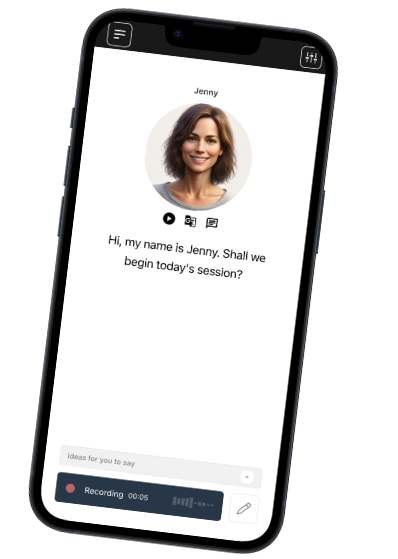
Talkio is the ultimate language training app that uses AI technology to help you improve your oral language skills!
Try Talkio