Live Translation in Microsoft Teams: Benefits and Communication Gaps
Last updated on
Editorial owner: Grzegorz Markowski · Editorial policy
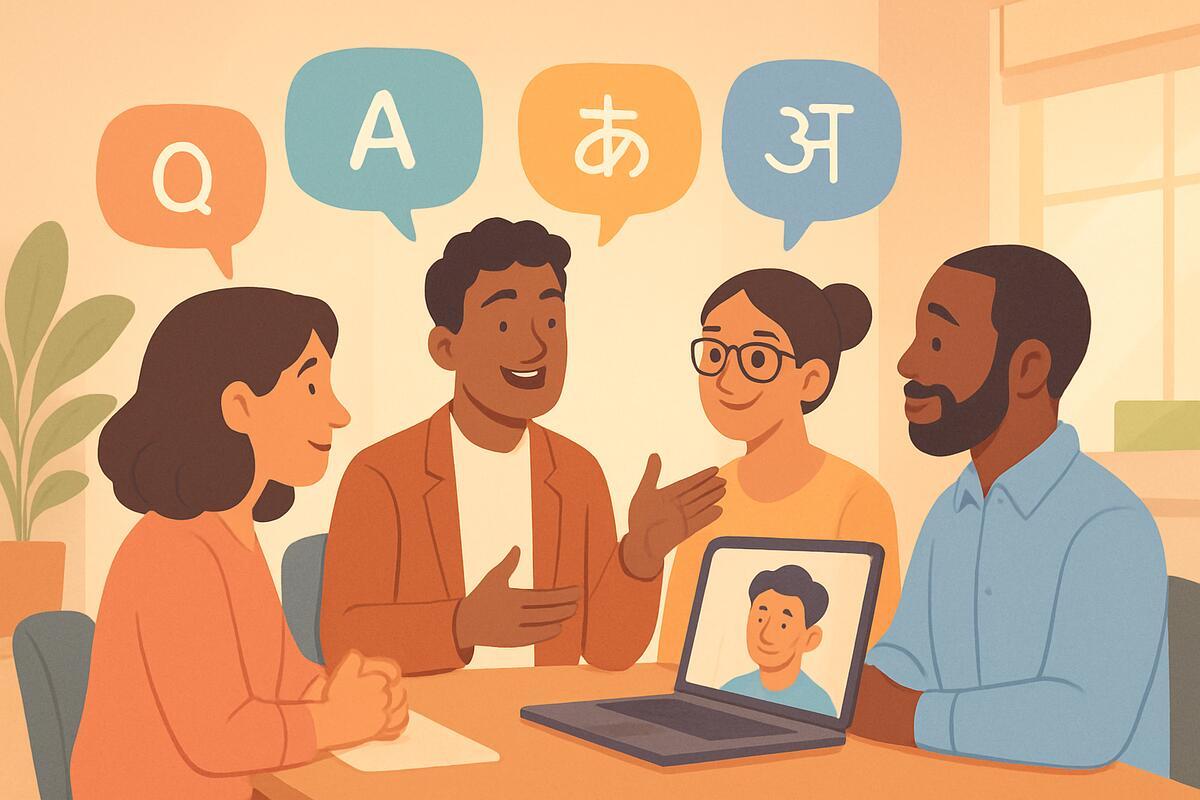
Live translation can make a multilingual meeting more accessible, especially when participants need help following the main content. It cannot guarantee that specialist terms, humor, indirect disagreement, or overlapping speech will be interpreted as intended. Teams get the best result when they treat translation as an accessibility layer and still design the meeting for clear human communication.
Make translated meetings easier to follow
- Share an agenda and key terminology in advance so people have context.
- Use short turns, state decisions explicitly, and avoid speaking over other participants.
- Confirm names, figures, deadlines, and action items in writing after the meeting.
- Keep developing direct speaking and listening skills for informal exchanges and relationship building.
Translation Gives You Words, Not Trust
Anyone who has worked on a multilingual team knows that the real work happens between the lines. When you crack a joke during a status call, when you pick up on someone’s hesitation before they voice a concern, when you match the tone of the room during a tense negotiation, those moments build trust. Translation tools strip all of that away.
A Harvard Business Review analysis found that social skills and the ability to read interpersonal dynamics are becoming more valuable in the labor market, not less. AI handles information transfer well. It handles relationship-building poorly. Speaking someone’s language, even imperfectly, signals effort, respect, and investment in the relationship.
Think about it from the other side. If your German client hears you stumble through a greeting in German before switching to English, they remember that. If a translation bot renders your words into German while you sit there silently, the effect is completely different.
The “Translation Layer” Creates a Communication Tax
Every time language passes through a translation layer, something gets lost. Not just nuance, but speed. Real-time captions in a meeting introduce a slight delay. Participants reading translated captions are always a beat behind. The natural rhythm of conversation, the back-and-forth that makes brainstorming sessions productive, breaks down when half the room is processing translated text instead of listening.
Research from the Journal of Cross-Cultural Psychology has shown that even small communication delays reduce perceptions of competence and warmth. In meetings where decisions happen fast, being the person who can respond immediately, in the language the room is speaking, is a tangible advantage.
This is especially true in high-stakes conversations. Professionals who rehearse difficult conversations in their second language consistently outperform those who rely on tools to bridge the gap for them.
Promotions Still Go to People Who Can Communicate Directly
Here is an uncomfortable truth about multilingual workplaces: the people who get promoted are almost always the ones who can operate fluently in the company’s working language. Translation tools can help you survive a meeting, but they cannot help you lead one.
Consider what leadership communication actually requires. You need to read the room, adjust your message on the fly, handle unexpected pushback gracefully, and project confidence through your voice. None of that works through a translation intermediary. When you are pitching an idea to executives or mediating a conflict between team members, your ability to present and persuade in the working language is what separates you from the rest of the team.
The data backs this up. Multilingual workers are earning 19% more in 2026, and that premium goes to people who actively use their language skills, not to people who let a bot handle the translation.
Translation Tools Are Best as Training Wheels, Not Crutches
None of this means you should ignore the new Teams feature. Real-time translation is genuinely useful in specific situations: onboarding in a new country, joining a meeting in a language you are just starting to learn, or catching a word you missed. The problem starts when translation becomes a permanent substitute for actually developing your speaking skills.
The smartest approach is to use translation as a bridge while you build the real thing. Follow along with the translated captions while training your ear to catch the original. Notice patterns and phrases that come up repeatedly. Then take those phrases and practice using them in actual conversation.
This is exactly where the gap between translation and real language skill becomes an opportunity. While your colleagues lean back and let the bot do the work, you can be the one closing that gap, building the kind of direct communication ability that no tool can replicate.
How to Build Speaking Skills Alongside Translation Tools
If you are working in multilingual meetings regularly, here is a practical approach to leveling up your speaking while still benefiting from translation features:
Before the meeting: Review the agenda and identify key terms in the target language. Practice saying them out loud. If you know a tricky topic is coming up, do a quick speaking warm-up focused on that vocabulary. Ten minutes of targeted practice can make a noticeable difference.
During the meeting: Use captions as a safety net, not a primary channel. Try to follow the spoken language first. When you feel confident enough, contribute a comment or question in the target language. Even short contributions signal engagement and build your confidence for next time.
After the meeting: Review the transcript. Identify phrases you did not understand in real time. Practice them. Look for moments where you wanted to speak up but hesitated, and rehearse what you would have said. AI conversation partners are particularly effective here because you can simulate the specific scenarios from your workday without the pressure of a live audience.
The key is consistency. Translation tools make it easy to coast, so you need to actively resist that pull. Set a goal: by next quarter, you will contribute at least one comment per meeting in the target language without checking the translation first.
The Future Belongs to Speakers, Not Listeners
Microsoft Teams’ new language detection is a milestone for workplace accessibility, and that matters. People who could not participate in multilingual meetings at all can now at least follow along. That is a genuine win.
But accessibility and fluency are not the same thing. The professionals who will thrive in increasingly global teams are the ones who invest in actually speaking, not just understanding. They are the ones who can jump into a conversation in Portuguese with a São Paulo client, switch to English for the London team, and handle the small talk in between without waiting for a caption to load.
AI translation will keep getting better. Research into how AI processes language is advancing rapidly. But the better translation gets, the more valuable direct human communication becomes. When everyone has access to the same translation tools, the differentiator is no longer information, it is connection. And connection requires your voice, in their language, without a middleman.
The technology that was supposed to make language learning obsolete might actually be the best argument for doubling down on it.
Talk Your Way
to Fluency
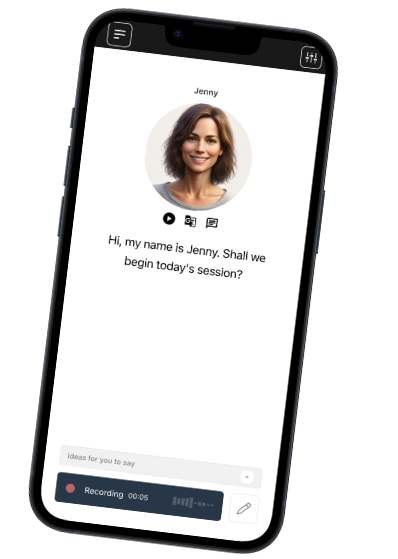
Talkio is the ultimate language training app that uses AI technology to help you improve your oral language skills!
Try Talkio